
When Is Knee Arthroscopy the Right Treatment Option?
Knee pain is one of the most common musculoskeletal problems, affecting people across all age groups from active young athletes and fitness enthusiasts to older adults experiencing age-related joint wear and tear. For many, knee discomfort can be managed effectively with conservative measures such as medication, targeted physiotherapy, lifestyle modifications, or supportive devices. However, there are situations where these non-surgical approaches may not provide sufficient relief, especially when structural damage occurs within the knee joint. In such cases, surgical intervention becomes necessary to restore function, reduce pain, and improve mobility. Among the advanced treatment options available today, knee arthroscopy stands out as a minimally invasive, precise, and highly effective procedure that allows orthopaedic specialists to both diagnose and treat various knee problems with minimal disruption to surrounding tissues.
What Is Knee Arthroscopy?
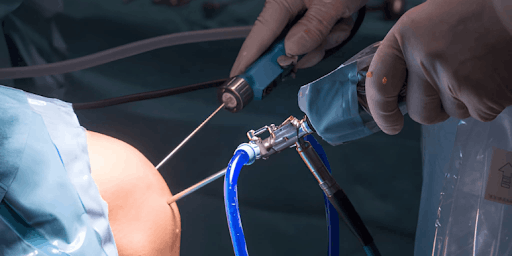
Knee arthroscopy is a minimally invasive surgical procedure used to diagnose and treat various knee joint problems. Instead of making a large incision, the surgeon makes small cuts and inserts a tiny camera called an arthroscope into the knee joint. This camera provides a clear view of the internal structures on a monitor, allowing precise diagnosis and treatment.
Using specialised instruments, the surgeon can repair or remove damaged tissues with minimal disruption to surrounding structures.
Why Knee Arthroscopy Is Preferred Over Traditional Surgery
Arthroscopy has become a preferred option in many cases because it offers several advantages over open knee surgery:
- Smaller incisions
- Less pain after surgery
- Reduced risk of infection
- Faster recovery and rehabilitation
- Shorter hospital stay
- Better cosmetic results
- However, knee arthroscopy is not suitable for every knee condition. Understanding when it is the right option is crucial.
Common Knee Conditions Treated with Arthroscopy
1. Meniscus Tears
The meniscus is a C-shaped cartilage that acts as a shock absorber between the thigh and shin bones. Meniscus tears can occur due to sports injuries or age-related degeneration.
When arthroscopy is recommended:
- Persistent pain despite rest and physiotherapy
- Locking or catching sensation in the knee
- Swelling after activity
Arthroscopy allows the surgeon to trim or repair the torn meniscus with precision.
2. Ligament Injuries (ACL & PCL)
Ligaments provide stability to the knee joint. Injuries to the Anterior Cruciate Ligament (ACL) or Posterior Cruciate Ligament (PCL) are common in athletes and physically active individuals.
Arthroscopy is suitable when:
- The knee feels unstable or gives way
- There is difficulty returning to sports or daily activities
- Conservative treatment has failed
Arthroscopic ACL reconstruction is widely performed due to its accuracy and faster recovery outcomes.
3. Cartilage Damage
Damage to the articular cartilage can cause pain, swelling, and stiffness. If left untreated, it may progress to osteoarthritis.
Arthroscopy is considered when:
- Cartilage damage is localised
- Pain persists despite non-surgical treatment
- Early intervention is needed to delay joint degeneration
4. Loose Bodies in the Knee Joint
Small fragments of bone or cartilage may float within the knee joint, causing pain and restricted movement.
Arthroscopy helps by:
- Identifying loose fragments
- Removing them safely
- Restoring smooth joint movement
5. Synovial Inflammation
The synovial membrane produces lubricating fluid for the knee joint. Inflammation can lead to pain and swelling.
Arthroscopy can be used to:
- Diagnose synovial disorders
- Remove inflamed tissue
- Improve joint comfort and function
When Is Knee Arthroscopy NOT the Right Option?
While arthroscopy is effective for many conditions, it is not always recommended, especially in advanced cases.
Advanced Osteoarthritis
In severe knee osteoarthritis with extensive cartilage loss:
- Arthroscopy may not provide long-term relief
- Joint replacement may be a better option
Diffuse Knee Pain Without Structural Damage
If pain is due to muscle weakness or alignment issues, non-surgical treatment is usually preferred.
A thorough evaluation by an orthopaedic surgeon is essential to determine suitability.
Who Is an Ideal Candidate for Knee Arthroscopy?
Knee arthroscopy may be the right option for individuals who:
- Have mechanical symptoms like locking or catching
- Experience persistent pain despite conservative treatment
- Have specific structural damage confirmed by MRI
- Want faster recovery and minimal surgical trauma
Age alone is not a deciding factor. The overall knee condition, activity level, and expectations are more important.
How Knee Arthroscopy Is Performed
Pre-Procedure Evaluation
Before recommending arthroscopy, the surgeon will:
- Review medical history
- Conduct a physical examination
- Order imaging tests like X-rays or MRI
The Procedure
- Performed under spinal or general anaesthesia
- Small incisions are made around the knee
- Arthroscopes and surgical instruments are inserted
- Damaged tissue is repaired or removed
The procedure usually takes 30-60 minutes, depending on complexity.
Recovery and Rehabilitation After Knee Arthroscopy
Immediate Recovery
- Most patients can walk with support on the same day
- Pain and swelling are usually mild to moderate
Physiotherapy
Rehabilitation plays a key role and includes:
- Strengthening exercises
- Range-of-motion training
- Gradual return to daily activities
Return to Normal Activities
- Desk work: 1-2 weeks
- Light activities: 3-4 weeks
- Sports: 6-12 weeks (depending on the condition)
Benefits of Early Arthroscopic Intervention
Choosing arthroscopy at the right time can:
- Prevent further joint damage
- Reduce long-term pain
- Improve knee stability and function
- Delay or avoid major surgery
Early diagnosis and timely treatment are crucial for optimal outcomes.
Risks Associated with Knee Arthroscopy
Although generally safe, like any surgical procedure, arthroscopy carries minimal risks:
- Infection
- Blood clots
- Stiffness
- Temporary swelling
These risks are rare when the procedure is performed by an experienced orthopaedic surgeon.
Importance of Choosing the Right Knee Specialist
The success of knee arthroscopy depends heavily on:
- Accurate diagnosis
- Proper patient selection
- Surgical expertise
- Post-operative rehabilitation planning
An experienced knee specialist ensures that arthroscopy is recommended only when it offers real benefits.
Frequently Asked Questions (FAQ)
What is knee arthroscopy?
Knee arthroscopy is a minimally invasive surgical procedure in which a small camera and specialised instruments are used to diagnose and treat knee joint problems through tiny incisions.
When is knee arthroscopy recommended?
Knee arthroscopy is recommended when persistent knee pain, swelling, locking, or instability does not improve with physiotherapy or medication, and imaging confirms structural damage.
Which knee conditions can be treated with arthroscopy?
Arthroscopy is commonly used to treat meniscus tears, ligament injuries (ACL/PCL), cartilage damage, loose bodies in the knee, and synovial inflammation.
Is knee arthroscopy suitable for arthritis patients?
Knee arthroscopy may help in early-stage arthritis with specific mechanical symptoms, but it is generally not effective in advanced osteoarthritis, where joint replacement is often advised.
How long does a knee arthroscopy procedure take?
The procedure usually takes 30 to 60 minutes, depending on the type and complexity of the knee condition being treated.
Knee arthroscopy is an effective and minimally invasive solution for treating specific knee problems such as meniscus tears, ligament injuries, cartilage damage, and loose bodies. However, it is not a one-size-fits-all treatment. Careful evaluation, correct diagnosis, and expert surgical decision-making are essential to achieve the best results.
If you are experiencing persistent knee pain, instability, or mechanical symptoms that are affecting your quality of life, consulting an experienced orthopaedic specialist is the right first step. With proper guidance and advanced treatment options, many patients can return to an active, pain-free lifestyle under the care of the best knee surgeon in Nagpur.