
Rolled Your Ankle? What a Ligament Tear Really Means and When to Get It Checked
Quick Answer
Most people roll an ankle at some point, and many recover with a few weeks of rest. The trouble starts when swelling, bruising, or a feeling of instability does not settle within a week, or when you cannot put weight on the foot at all. These signs suggest the supporting bands of the joint may be torn, and an orthopedic examination can confirm the grade of the damage and guide the right recovery plan.
Key Points
- Most sprains happen when the foot twists inward on uneven ground or during sport.
- Pain, swelling, and bruising appear within hours, and severity depends on how much tissue is torn.
- Inability to bear weight, a pop at the time of injury, or repeated giving way needs medical review.
- Untreated tears can leave the joint unstable and prone to repeated sprains and early wear.
- Most tears heal without surgery, but a few need repair.
An Everyday Twist That Is Not Always Minor
A missed step on a staircase, a football tackle, or a walk on a rough road can all end with the same sudden pain on the outer side of the foot. Many people tape it up, walk it off, and move on. For some, though, the problem returns every few months, and the joint never quite feels trustworthy again. Understanding the basics of an ankle ligament injury helps you judge whether rest at home is enough or whether the joint needs a proper examination. The sooner a significant tear is identified, the easier it is to protect the joint from long-term trouble.
How the Ankle Holds Itself Together
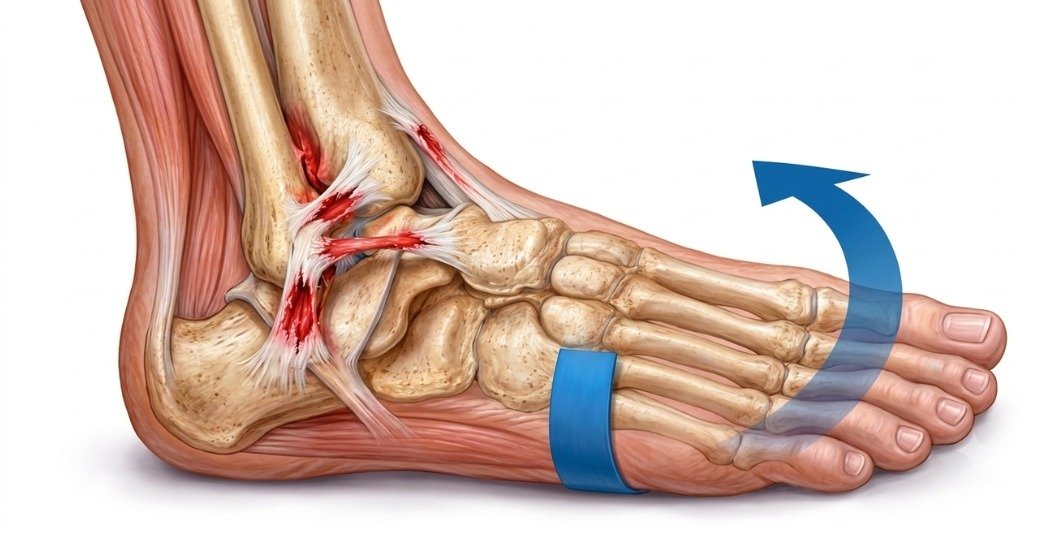
The ankle is stabilised by three groups of ligaments, which are strong fibrous bands that link the lower leg bones to the foot. The ones on the outer side are the most commonly damaged, since the foot most often rolls inward. The bands on the inner side are thicker and tougher, so they tear less often. A third group, above the joint, holds the two shin bones together and is usually hurt in high-impact twisting injuries. When one of these bands is overstretched or torn, the joint loses some of its natural stability.
Understanding Grades of Damage
Doctors usually classify these injuries in three grades:
- Grade 1: The ligament is stretched with tiny tears. There is mild swelling and tenderness, and walking is possible with some discomfort.
- Grade 2: The ligament is partially torn. Swelling and bruising are more obvious, and the joint feels loose when tested.
- Grade 3: The ligament is torn completely. There is marked swelling, bruising, and a clear sense of instability, and walking is usually difficult.
When people describe a ligament break in ankle, they are generally referring to a grade 3 tear. Even this grade often heals without surgery, but it takes careful rehabilitation and sometimes a period in a supportive boot.
Recognizing the Warning Signs
Knowing the symptoms of a ligament tear in the ankle helps you act at the right time. Look out for:
- Pain on the outer or inner side of the joint that worsens when you walk or twist the foot
- Swelling that appears quickly and may spread into the foot
- Bruising that develops over a day or two, sometimes tracking down towards the toes
- A popping or tearing sensation at the moment of injury
- Tenderness when the area is pressed
- A feeling that the joint is wobbly or may give way on uneven ground
- Stiffness that limits how far you can move the foot
Pain alone does not tell you how serious the damage is. A badly torn ligament can sometimes hurt less than a bruised bone, which is why an examination matters.
When a Sprain May Hide a Fracture
Ankle sprains and small fractures can look almost identical in the first few hours. Doctors use simple guidelines to decide whether an X-ray is needed. Seek urgent assessment if you cannot take four steps immediately after the injury, if there is tenderness over the bony bumps on either side of the joint, or if the foot looks out of shape.
How Doctors Diagnose the Problem
The doctor begins by asking how the injury happened and then examines the swelling, the tenderness, and the stability of the joint. Specific tests compare how far the joint moves on the injured side with the healthy one. An X-ray helps rule out fractures. When a severe tear, cartilage damage, or a long-standing problem is suspected, an MRI scan gives a detailed picture of the ligaments and surrounding tissue.
Treatment Options
Early care at home
For the first few days, protect the joint with rest, cold packs applied for fifteen minutes at a time, a compression bandage, and elevation of the foot above heart level. Use crutches or a brace if walking is painful.
Rehabilitation
Physiotherapy is the most important part of recovery. It begins with gentle movement, then moves on to strengthening, balance training, and a gradual return to walking, running, and sport. Skipping this step is the most common reason for repeated sprains.
When surgery is considered
Surgery is considered when the joint stays unstable despite proper rehabilitation, when sprains keep recurring, or when there is associated cartilage or tendon damage. Modern keyhole techniques can repair or reconstruct the damaged bands through small incisions, with a structured rehabilitation plan after the procedure.
Protecting Your Ankles After Recovery
- Complete your rehabilitation programme even after the pain has gone.
- Strengthen the calf and foot muscles and practice balance exercises regularly.
- Choose supportive footwear that suits your activity and walking surface.
- Warm up before sport and consider a brace if you have a history of sprains.
Frequently Asked Questions
A mild sprain often settles within two to three weeks, while a severe tear may take six to twelve weeks of careful rehabilitation. Recovery varies from person to person.
Some people can walk with a limp, but doing so on a significant tear may delay healing or cause further damage. Get the joint examined if walking is painful or the ankle feels unstable.
No. The majority heal with rest, support, and physiotherapy. Surgery is reserved for severe or persistent instability.
Repeated giving way often means the ligaments healed loose or the stabilising muscles are weak. A proper assessment can identify the cause and prevent further damage.
A twisted ankle can seem trivial in the first hour, yet a poorly healed tear can quietly affect balance, sport, and daily walking for years. Paying attention to swelling, instability, and persistent pain gives you the chance to treat it properly. If you are searching for a top orthopedic doctor in Nagpur, consult Dr. Nawaid Ahmed for a detailed examination, accurate imaging, and a recovery plan designed around your lifestyle.