Shoulder Pain After a Fall? How to Tell a Ligament Injury from a Fracture
Quick Answer
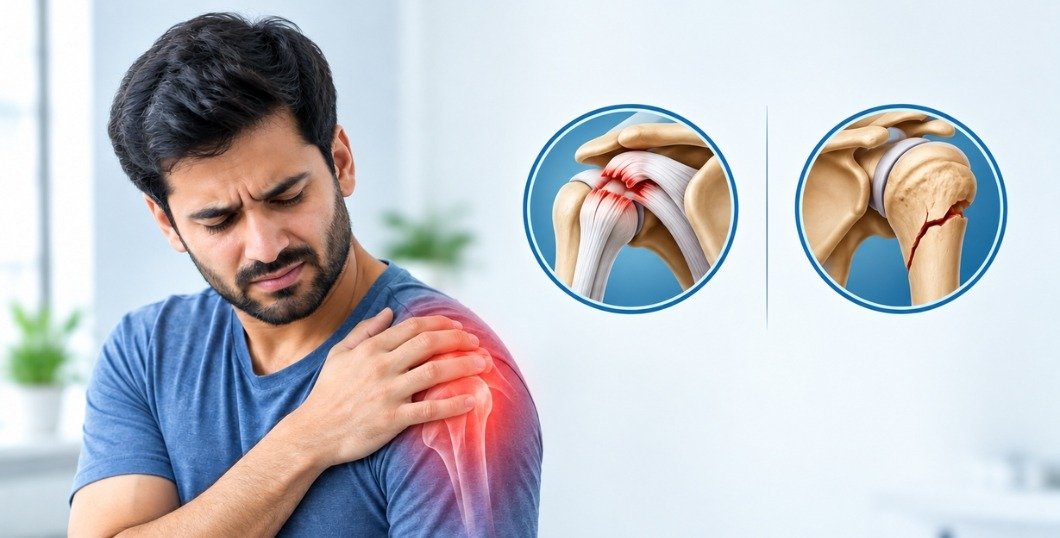
Both a ligament tear and a bone fracture can follow a fall, a sports collision, or a road accident, and both cause sudden pain and trouble lifting the arm. A fracture usually brings visible swelling, bruising, or deformity, while a ligament injury often causes a sense of looseness or a catching pain. Since the two need different care, an X-ray and an examination by an orthopedic doctor are the safest way to know which one you have.
Key Points
- Falls on an outstretched hand or the point of the joint are the most common triggers.
- A fracture often causes immediate, severe pain and difficulty moving the arm at all.
- A ligament tear may allow some movement but causes weakness, clicking, or a feeling of instability.
- Hairline fractures can be easy to miss without an X-ray.
- Early diagnosis improves recovery and lowers the risk of long-term stiffness.
Why Shoulder Injuries Are Easy to Misread
The joint is the most mobile one in the human body, and that freedom makes it vulnerable. It relies on a delicate balance of bones, muscles, and strong fibrous bands to stay stable. When an injury strikes, it is hard to tell which structure has been hurt just by how it feels. Many people wait a few days, hoping the pain will settle, and by then the stiffness has begun. Understanding how a damaged shoulder ligament behaves compared with a cracked bone can help you decide how quickly to seek help.
What Happens in a Ligament Injury
Ligaments are tough bands of tissue that connect bone to bone and hold the joint steady. A sudden pull, twist, or direct blow can stretch them or tear them partly or completely. People often describe a pop at the moment of injury, followed by pain and tenderness at the top or front of the joint.
Typical features include:
- Pain when lifting the arm above shoulder height or reaching across the body
- A feeling that the joint slips, catches, or is not secure
- Swelling or a visible bump at the top of the joint in some cases
- Weakness when carrying or pushing objects
- Pain at night when lying on the affected side
Mild sprains usually improve with rest and rehabilitation. Complete tears and repeated slipping may need further treatment.
What Happens When a Bone Cracks
A fracture involves the collarbone, the upper arm bone near the joint, or the shoulder blade. The pain is usually sharp and immediate, and it worsens with any attempt to move the arm. Swelling and bruising may spread down the arm over the next day or two.
You may have a broken shoulder if you notice any of the following:
- Obvious deformity, a drooping joint, or one side sitting lower than the other
- Intense pain that does not ease with rest
- Inability to lift the arm even slightly
- Grinding or a crunching sensation on movement
- Numbness or tingling in the hand, which may suggest nerve involvement
These signs call for urgent medical attention, ideally the same day.
Hairline Cracks: The Injury That Hides
Not every fracture looks dramatic. A small hairline crack may cause only moderate pain and some swelling, so people assume it is a simple strain. The arm can still move, though painfully, and this false reassurance leads to delay. Ignoring such a fracture can allow it to displace or heal in a poor position. If pain persists beyond a few days after a fall, or tenderness stays at one spot over the bone, an X-ray is worthwhile.
How Doctors Find the Real Problem
The assessment usually begins with a conversation about how the injury happened, followed by a physical examination. The doctor checks the range of movement, tenderness, strength, and stability of the joint, and also tests for nerve and circulation problems.
- X-ray: shows fractures, dislocations, and bone alignment.
- MRI: shows the soft tissue, ligaments, tendons, and cartilage in detail.
- CT scan: gives a three-dimensional view of complex fractures.
- Ultrasound: helps assess soft tissue injuries in selected cases.
Imaging is chosen by the doctor depending on what the examination suggests.
Treatment Depends on the Diagnosis
For ligament injuries
Mild and moderate injuries respond well to a sling for short-term comfort, rest from aggravating activity, cold packs in the early days, and a guided physiotherapy programme. The aim is to restore movement first and then rebuild strength. Complete tears, recurrent slipping, or injuries in athletes and heavy manual workers may need keyhole surgery to repair or reconstruct the damaged tissue.
For fractures
The right shoulder crack treatment depends on the bone involved, how far the pieces have moved, and the person’s age and activity. Stable fractures with little displacement often heal in a sling with regular follow-up X-rays. Displaced or unstable fractures may need surgery, using plates, screws, or rods to hold the bone in position while it heals. In every case, early movement under guidance prevents the stiffness that often follows long immobilisation.
What You Can Do Before Seeing the Doctor
- Rest the arm in a comfortable position and support it with a sling or folded cloth.
- Apply a cold pack wrapped in cloth for around fifteen minutes at a time.
- Avoid lifting, pulling, or forcing the joint through painful movement.
- Do not massage or manipulate the area, as this can worsen a fracture.
- Take note of how the injury happened, as this helps the diagnosis.
Frequently Asked Questions
Visible deformity, severe pain with any movement, and bruising suggest a fracture, while looseness and weakness suggest a ligament problem. Only an examination and imaging can confirm it.
Many collarbone fractures with little displacement heal well with a sling and rest. Doctors recommend surgery when the bone pieces are widely separated or the skin is under pressure.
Mild ligament sprains often settle within a few weeks, while fractures typically need six to twelve weeks for bone healing, followed by rehabilitation. Individual recovery varies.
If there is deformity, numbness, or severe pain, do not wait. For milder pain, review is still advisable if there is no clear improvement within three to four days.
A painful joint after a fall deserves more than a wait-and-see approach. Whether the cause is a stretched ligament or a cracked bone, early diagnosis protects movement, strength, and long-term comfort. If you are searching for a shoulder specialist in nagpur you can trust and consult Dr. Nawaid Ahmed for a careful examination, accurate imaging, and a treatment plan that suits your needs and your lifestyle.