
Hairline Fracture in the Shoulder: Symptoms, Treatment, and Healing Time
Quick Answer
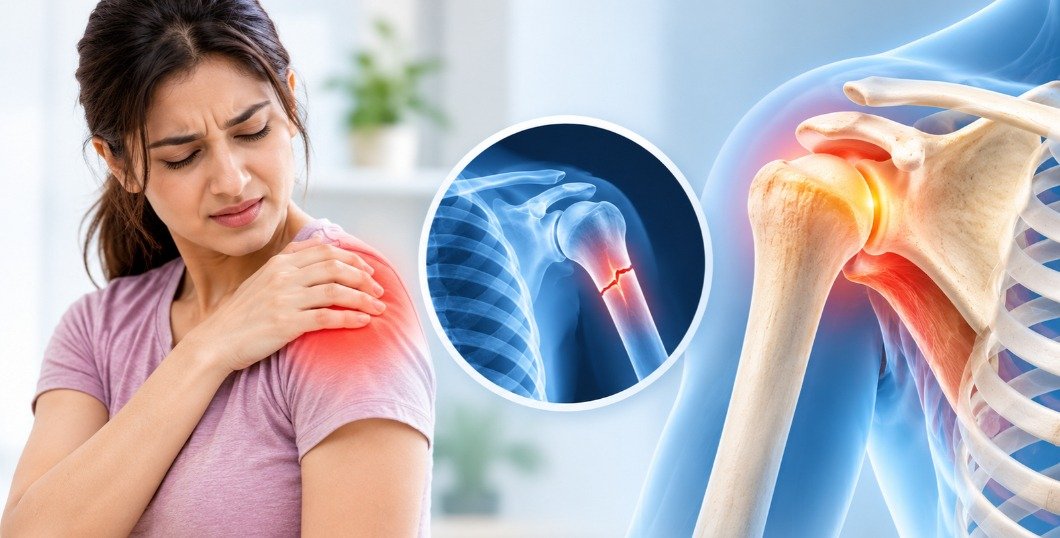
A shoulder hairline fracture is a small crack in one of the bones that form the shoulder joint. It commonly occurs after a fall, direct impact, or sports injury. Symptoms may include shoulder pain, tenderness, mild swelling, bruising, and difficulty raising the arm. Most stable hairline fractures heal without surgery through rest, a sling, activity modification, and guided physiotherapy. Recovery generally takes around 6–12 weeks, depending on the affected bone and severity of the fracture.
Key Points
- A hairline fracture is a small crack in the bone that may cause pain and restricted shoulder movement.
- Falls, sports injuries, and direct impacts are common causes.
- X-rays help identify fractures, while CT or MRI scans may be needed in selected cases.
- Most stable shoulder fractures can heal without surgery.
- Recovery depends on bone healing, injury severity, and proper rehabilitation.
What Is a Hairline Fracture in the Shoulder?
The shoulder is a complex joint formed by three main bones: the upper arm bone (humerus), shoulder blade (scapula), and collarbone (clavicle). A hairline fracture is a thin crack in one of these bones without complete separation.
Unlike a major fracture, the bone may remain in its normal position. However, even a small crack can cause considerable discomfort, especially when lifting the arm, reaching overhead, or sleeping on the affected side.
The location of the fracture plays an important role in treatment. A crack in the upper arm bone may affect shoulder movement differently from a collarbone or shoulder blade fracture. Early assessment helps determine the extent of damage and the appropriate recovery plan.
What Are the Common Symptoms of a Shoulder Hairline Fracture?
Symptoms may develop immediately after an injury or become more noticeable over the following hours.
Common warning signs include:
- Shoulder pain: Discomfort around the shoulder that increases when moving the arm.
- Tenderness: Pain when touching or pressing the injured area.
- Swelling: Mild to moderate swelling around the affected bone.
- Bruising: Skin discolouration may appear following the injury.
- Restricted movement: Difficulty raising, rotating, or extending the arm.
- Pain during sleep: Discomfort may increase when lying on the injured shoulder.
A hairline fracture can sometimes be mistaken for a muscle strain or shoulder sprain because the symptoms may appear similar. Persistent pain after a fall or direct impact should therefore be examined by an orthopedic specialist.
What Causes a Hairline Fracture in the Shoulder?
A small shoulder fracture can occur when excessive force is applied to the bones forming the joint. Some common causes include:
- Falls: Landing directly on the shoulder or falling onto an outstretched hand.
- Sports injuries: Direct collisions, awkward landings, or sudden impacts during physical activities.
- Road accidents: A strong impact involving the shoulder can cause a small bone crack.
- Osteoporosis: Reduced bone density can make bones more vulnerable to fractures, even after relatively minor injuries.
- Repetitive stress: Repeated loading can sometimes cause stress fractures, although these are less common around the shoulder.
Identifying the cause helps doctors understand the injury and assess whether other structures, such as tendons or surrounding joints, are also affected.
How Is a Hairline Shoulder Fracture Diagnosed?
An accurate diagnosis is important because a small fracture may not always be obvious from the symptoms alone.
The doctor generally begins by asking how the injury occurred and examining the shoulder for tenderness, swelling, and restricted movement.
Diagnostic tests may include:
- X-ray: Usually the first imaging test used to identify a fracture and check bone alignment.
- CT scan: Provides detailed images of the bone and may help assess complex fractures.
- MRI scan: Can identify certain fractures that are difficult to see on X-rays and evaluate surrounding soft tissues.
The choice of imaging depends on the injury and examination findings. Early diagnosis helps prevent unnecessary movement and supports appropriate treatment.
Can You Move Your Arm With a Hairline Shoulder Fracture?
Yes, some people can still move their arms with a hairline fracture. However, the ability to move the shoulder does not rule out a fracture.
Pain may increase when lifting the arm, reaching overhead, or carrying objects. Continuing these activities can place additional stress on the injured bone.
If a fracture is suspected, avoid testing the shoulder repeatedly or forcing it through painful movements. Use support as advised by a doctor and seek medical evaluation before returning to normal activities.
Shoulder Fracture Treatment: With and Without Surgery
The appropriate shoulder fracture treatment depends on the affected bone, fracture location, stability, and whether the bone has moved out of position.
Non-Surgical Treatment
Most stable hairline fractures can be managed without an operation.
Treatment may include:
- Sling support: A sling helps protect the shoulder and limits unnecessary movement during the initial healing period.
- Pain management: Prescribed medication may help control discomfort.
- Activity modification: Avoid heavy lifting, overhead movements, and sports until the bone has healed sufficiently.
- Cold packs: Wrapped ice packs may help reduce swelling and discomfort.
- Physiotherapy: Gentle exercises are introduced at the appropriate stage to restore shoulder movement and strength.
The duration of sling use depends on the fracture. Prolonged immobilisation without medical guidance should be avoided because it can cause shoulder stiffness.
Surgical Treatment
Surgery is not usually required for a stable hairline fracture. However, an operation may be considered if the fracture is displaced, involves an important part of the joint, or affects shoulder stability.
Depending on the injury, the surgeon may use plates, screws, or other fixation devices to hold the bone in the correct position while it heals.
How Long Does Shoulder Fracture Recovery Take?
Shoulder fracture recovery varies depending on the bone involved, the severity of the crack, age, bone health, and treatment approach.
A general recovery timeline may look like this:
- Weeks 1–2: Pain and swelling gradually begin to settle. The shoulder may need sling support.
- Weeks 2–6: The bone continues healing. Controlled movement may begin under medical guidance.
- Weeks 6–8: Many uncomplicated fractures show significant healing, and rehabilitation may gradually progress.
- Weeks 8–12: Strength and shoulder movement continue improving. Some patients may return to regular activities.
- Beyond 12 weeks: More complex injuries may need additional rehabilitation before full recovery.
These timelines are estimates, not fixed deadlines. Return to heavy lifting, sports, or demanding activities should depend on clinical assessment and evidence of adequate healing.
What Factors Can Delay Shoulder Fracture Healing?
Not every shoulder fracture heals at the same rate. Several factors can affect recovery:
- Fracture severity: More complex or displaced fractures generally take longer to heal.
- Age and bone health: Older adults and people with reduced bone density may experience slower healing.
- Smoking: Tobacco use can interfere with normal bone healing.
- Medical conditions: Certain health conditions may affect the body’s ability to repair bone.
- Returning to activity too early: Heavy lifting or excessive shoulder movement can interfere with recovery.
- Incomplete rehabilitation: Skipping prescribed exercises may lead to stiffness and reduced shoulder strength.
Following medical advice and attending follow-up appointments can help identify healing problems early.
When Should You See an Orthopedic Specialist?
Shoulder pain following a fall or accident should not automatically be considered a simple muscle strain. Medical evaluation is particularly important if you experience severe pain, swelling, visible deformity, or difficulty raising your arm.
Seek urgent medical attention if you notice numbness, weakness, a cold or pale hand, or changes in circulation following an injury.
An orthopedic specialist can examine the shoulder, recommend appropriate imaging, and determine whether non-surgical care or an operation is necessary.
Frequently Asked Questions
Yes. Many stable hairline fractures heal naturally with appropriate support, activity modification, and medical monitoring.
Pain varies depending on the location and severity. Some people experience mild discomfort, while others have significant pain during shoulder movement.
It is generally better to avoid putting direct pressure on the injured shoulder. Follow your doctor’s advice regarding sleeping position and sling support.
No. Most stable and non-displaced fractures can be treated without surgery. Operations are considered when bone alignment or joint stability is affected.
Gentle exercises may begin once the doctor confirms they are appropriate. Strengthening and resistance exercises should be introduced gradually as healing progresses.
A hairline fracture in the shoulder may appear minor, but ignoring the injury can lead to prolonged pain, restricted movement, and delayed recovery. Early diagnosis, appropriate support, and a structured rehabilitation program are important for restoring shoulder function.
If you experience persistent shoulder pain after a fall, sports injury, or direct impact, consult an experienced shoulder specialist in Nagpur for proper evaluation. Dr. Nawaid Ahmed, an arthroscopy and joint replacement specialist, provides assessment and treatment for shoulder fractures and other shoulder conditions. Timely medical care and a treatment plan suited to the fracture can help support safe healing and a gradual return to daily activities.