
Knee Ligament Injury or Just a Sprain? How to Tell in the First Week
Quick Answer
If your knee twisted, popped, or gave way during sport or a fall, a supporting band inside or beside the joint may be damaged. Swelling within hours, a loose or wobbly feeling, and trouble putting full weight on the leg are the main clues. Rest, cold packs, and support help in the first few days, but any knee that stays swollen or unstable for a week should be examined by an orthopedic doctor, since a scan is the only reliable way to grade the damage.
Key Points
- The knee has four main stabilising bands, and each one fails in a different way.
- A pop at the moment of injury followed by rapid swelling is a classic warning sign.
- Walking on an unstable knee can damage the cartilage and cushioning pads inside the joint.
- Mild sprains recover with rest and physiotherapy, while complete tears in active people often need surgery.
- Early assessment makes the difference between a simple recovery and long-term instability.
The Moment Your Knee Betrays You
Most people remember the exact moment. A sudden change of direction on the football field, a bad landing from a jump, a skid on a wet road, and the knee twists beyond its limits. Often there is a pop, a rush of pain, and a sense that the leg cannot be trusted. Anyone who types ligament tear knee into a search bar at this stage is usually looking for one answer: how serious is it, and what should I do right now? The sections below walk you through the first week, the warning signs, and the decisions that follow.
Meet the Four Bands Holding Your Knee Together
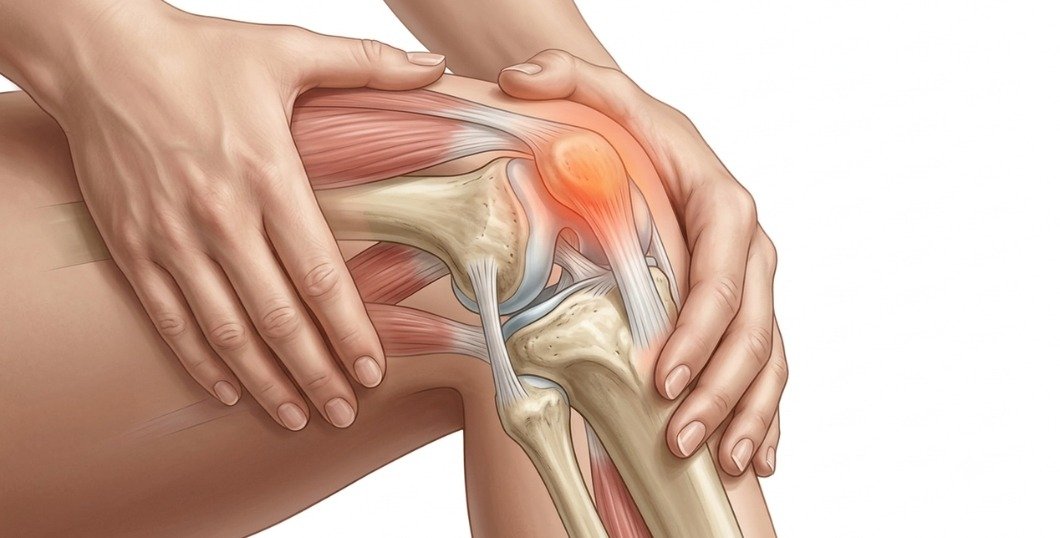
Four main bands keep the thigh bone and shin bone aligned:
- The anterior cruciate ligament (ACL): sits in the centre of the joint and prevents the shin from sliding forward. It is the most commonly injured band in sport.
- The posterior cruciate ligament (PCL): prevents the shin from sliding backward and is usually injured by a direct blow to the front of the shin, such as in a road accident.
- The medial collateral ligament (MCL): runs along the inner side and is hurt when the knee is pushed inward.
- The lateral collateral ligament (LCL): runs along the outer side and is hurt less often.
Knowing which band is involved matters, because treatment depends on it. The MCL often heals well on its own, while the ACL rarely does.
The First 72 Hours: What Helps
Immediate care limits swelling and protects the joint until you can be examined.
- Rest: Avoid sport and stop putting full weight on the leg if it hurts.
- Cold packs: Apply a wrapped cold pack for fifteen minutes at a time, several times a day.
- Compression: A snug elastic bandage helps control swelling, but it should not be tight.
- Elevation: Keep the leg raised above heart level when resting.
- Support: Use crutches or a walking aid if the knee feels unstable.
Avoid massaging the knee, applying heat in the first two days, or testing the joint by repeatedly twisting it. These can aggravate swelling or cause further damage.
What the Pain Typically Feels Like
Pain from this kind of damage has a typical pattern. Ligament pain in knee usually appears on one side or deep inside the joint rather than across the whole knee. It worsens with twisting, pivoting, or climbing down stairs, and it may ease with rest. Along with pain, you may notice:
- Swelling that develops within a few hours, particularly with an ACL injury
- A feeling that the knee will buckle when you turn or change direction
- Tenderness along the inner or outer edge of the joint
- Difficulty straightening or fully bending the leg
- A locked or catching sensation if the cartilage pad is also hurt
Pain by itself is not a reliable guide, because a complete tear sometimes hurts less than a mild sprain. Instability is often the more telling sign.
Is It Serious? Grades of Damage
Many people ask, is ligament tear serious, and the honest answer is that it depends on the grade.
- Grade 1: The band is stretched with microscopic tears. There is mild pain and little or no looseness, and recovery takes a few weeks.
- Grade 2: The band is partially torn. Swelling is clear and the joint feels somewhat loose, with recovery taking several weeks to a few months.
- Grade 3: The band is completely torn. Instability is marked, and a complete ACL tear in particular rarely heals without surgery.
Even a grade 3 injury is not an emergency in itself, but delay does carry risk. A knee that keeps giving way can damage the cartilage and the meniscus, the cushioning pads inside the joint, and may lead to early arthritis.
How Doctors Confirm the Diagnosis
The doctor begins with a detailed history and gently tests the stability of each band by moving the knee in specific directions. An X-ray rules out fractures. An MRI scan is the most useful test, showing the ligaments, meniscus, and cartilage clearly, and it helps decide between non-surgical and surgical care.
Treatment Choices
Without surgery
Grade 1 and 2 injuries, most MCL injuries, and some partial ACL injuries in less active people respond well to a hinged knee brace, a progressive physiotherapy programme, and a gradual return to activity. Building the thigh and hamstring muscles gives the joint extra stability.
With surgery
Reconstruction is usually advised when the ACL is completely torn and the person is active in sport, has a physically demanding job, or the knee keeps giving way. Using keyhole techniques, the surgeon replaces the damaged band with a graft, typically taken from a tendon. Rehabilitation after surgery is essential, and a return to pivoting sport usually takes around six to nine months or longer, depending on healing and strength.
Frequently Asked Questions
Some people can walk with a limp, but doing so on an unstable knee risks cartilage damage. Use support and get examined soon.
Collateral bands often heal with bracing and rehabilitation. A complete ACL tear usually does not heal on its own, although some less active people manage well without surgery.
Most people do, after finishing a structured rehabilitation programme and passing strength and stability tests.
A knee that gives way is a signal that should not be ignored, whether the damage turns out to be a mild sprain or a complete rupture. Prompt care in the first week, an accurate scan, and a recovery plan matched to your activity level protect the joint for years to come. If you are looking for an orthopedic doctor nagpur trusted for knee injuries, consult Dr. Nawaid Ahmed for a careful examination, clear diagnosis, and treatment designed around your lifestyle.